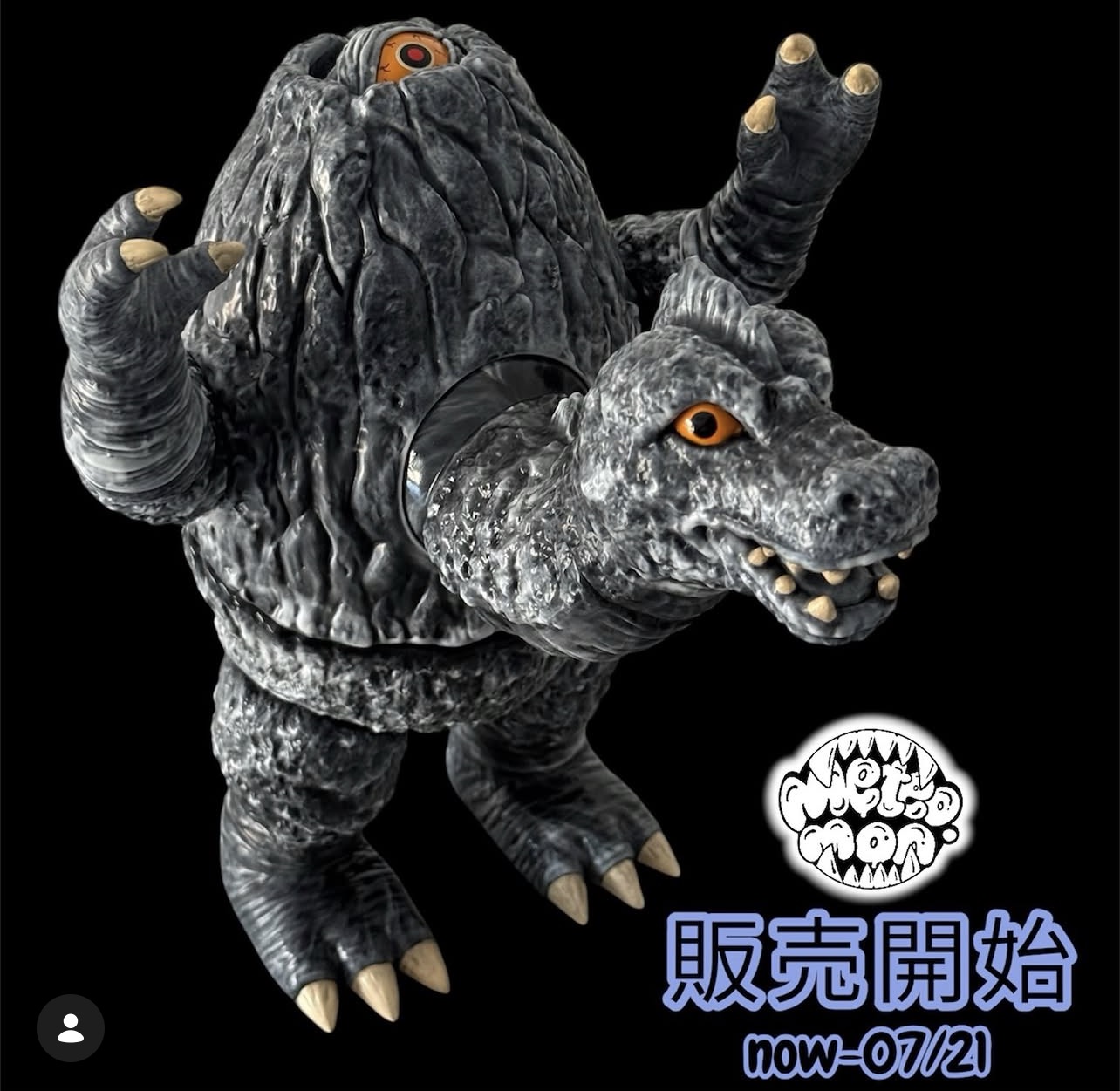
If you have ever watched a giant monster flatten Tokyo and thought “I want that on my shelf”, you already understand sofubi. Short for sofuto biniru (soft vinyl), sofubi are Japanese vinyl figures cast in moulds and finished by hand — the toys that grew out of the kaiju cinema boom of the 1960s and evolved into one of the most passionate collector cultures on earth. This guide explains what sofubi is, where it came from, and how to start collecting it.
What does “sofubi” actually mean?
Sofubi refers both to the material and the tradition. The figures are made from soft polyvinyl chloride, poured as liquid vinyl into metal moulds in a process called slush casting. Because the vinyl sets against the mould walls, each figure is hollow, light and slightly soft to the touch — very different from hard resin statues or injection-moulded model kits.
What makes sofubi special is the finishing. Paint is almost always applied by hand, usually with spray guns and masking, which means even two figures from the same run can differ slightly. Artists release the same sculpt in colourways — limited paint variants — and collectors chase them like sneakerheads chase drops.
A very short history of sofubi
The story starts in post-war Japan. Marusan, a toy maker founded in 1947, is widely credited with kicking off the vinyl kaiju boom when monster television and cinema exploded in the mid-1960s. Suddenly every child in Japan wanted an Ultraman alien or a Godzilla on the desk, and soft vinyl was the perfect material: cheap, safe, colourful and fast to produce.
In 1969, former Marusan staff founded Bullmark, which produced some of the most iconic — and today most valuable — vinyl kaiju ever made. Those original 1960s and 70s figures, with their primitive moulds and hand-painted details, are the holy grails of the vintage market.
After the boom years, sofubi went underground — until a revival starting in the 1990s brought it back as an art form. Independent studios and artists began sculpting their own monsters, casting them in small runs and selling them at events like Wonder Festival. Today’s scene spans legendary indie makers like Paul Kaiju, GUUMON and Blobpus, alongside reissues of the classic licenses.
Why collectors love it
- Every piece is slightly unique. Hand-sprayed paint means no two figures are truly identical.
- Small runs, real scarcity. Indie releases can be as limited as 5 to 50 pieces worldwide.
- Artist culture. You are not just buying a toy; you are buying a specific maker’s monster, tracked and traded by name.
- Tactility. Soft vinyl feels alive in the hand in a way resin and plastic never do.
- History. A shelf of sofubi is a half-century of Japanese pop culture in miniature.
What about the money?
Sofubi spans every budget. Reissues and open-edition figures start around a few dozen euros, while vintage originals and rare colourways reach four, five and occasionally six figures. We have covered the economics of the top end separately in our guide to the most expensive sofubi ever sold. If you are just starting, condition and authenticity matter most — read our guide to spotting fake sofubi before you spend serious money.
How to start a sofubi collection
Start with what you love, not what is hyped. Pick a character, an artist or an era and go deep rather than wide. Buy from sellers who show the actual figure, grade condition honestly and know the provenance — questions we answer in our FAQ for every piece we offer.
You can browse our current vault of hand-picked sofubi in the sofubi & kaiju section — every piece authenticated and shipped worldwide from the Netherlands. And if you want to see fourteen years of collector photography, our picture archive holds over two thousand photos from shows, collections and hunts.