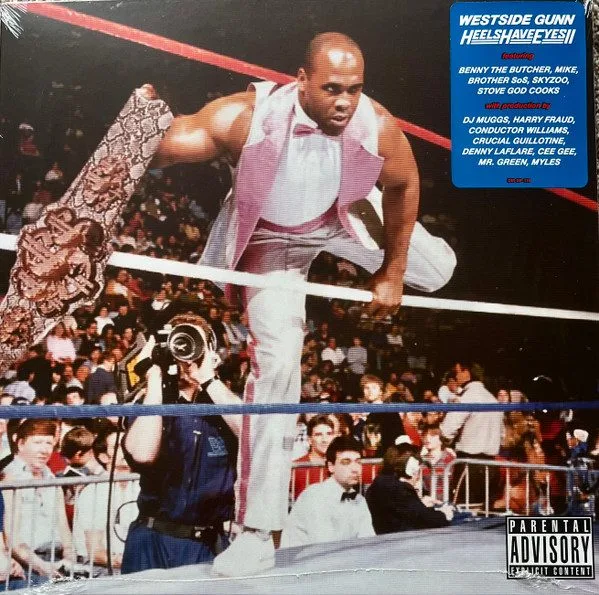
Two of the most obsessive collecting cultures on earth — Japanese monster toys and hip-hop vinyl — grew up separately and somehow ended up on the same shelves. At KaijuMonsteR we stock both, and we are not the only ones: scratch any serious vinyl head and you will often find a sofubi shelf behind them, and vice versa. Here is why the two scenes belong together.
Monsters in the music
The connections are literal, not imagined. One of the most famous cases in sample-clearance history: Pharoahe Monch’s “Simon Says” was built on a Godzilla film theme, and the resulting rights dispute with Toho is legendary among crate diggers. Eminem named a chart-topping single “Godzilla”. Monster-movie imagery runs through hip-hop’s villain aesthetics — masked personas, city-destroying bravado, the whole larger-than-life mythology that kaiju cinema perfected decades earlier.
Once you see it, you cannot unsee it: the same cinematic language of scale and destruction that made Godzilla an icon in 1954 became the visual vocabulary of rap’s biggest personalities.
The collector instinct is the same
Talk to collectors in both scenes and the psychology is identical:
- Scarcity worship. A 25-copy test pressing and a 25-copy sofubi colourway trigger the exact same hunt.
- Condition obsession. Mint vinyl grading and dead-stock toy grading are twin disciplines — see our vinyl grading guide for how deep that goes.
- Ephemera matters. The obi strip on a Japanese record and the original tag on a vintage figure serve the same purpose: proof of completeness, the difference between a collectible and a relic.
- Archive fever. Both scenes document everything — catalogues, price guides, photo archives. Our own 2,200-photo archive exists because collectors demanded proof of everything.
Japanese pressings: where the scenes physically overlap
Hip-hop collectors chase Japanese vinyl pressings for their quality and packaging — and Japanese releases come wrapped in obi strips that collectors refuse to discard. Our guide to obi strip editions covers that culture in depth. The short version: the country that perfected kaiju also perfected the record as a collectible object.
The oddities aisle
Both scenes also love the weird stuff: white labels, promos and mispresses in vinyl; prototype paint jobs and factory errors in sofubi. A misprint is a story; a one-off colourway is a story. Collectors in both cultures would rather own the strange piece with a tale than the common one without.
One shop, both obsessions
That is the whole idea behind KaijuMonsteR. Browse the sofubi & kaiju vault and the rare hip-hop vinyl selection in one place — and if your collection lives on both shelves too, you are exactly who we built this for. Read the rest of our collecting guides to go deeper down either rabbit hole.